
Loading...
Serving San Luis, AZ and surrounding areas. (928) 291-0483
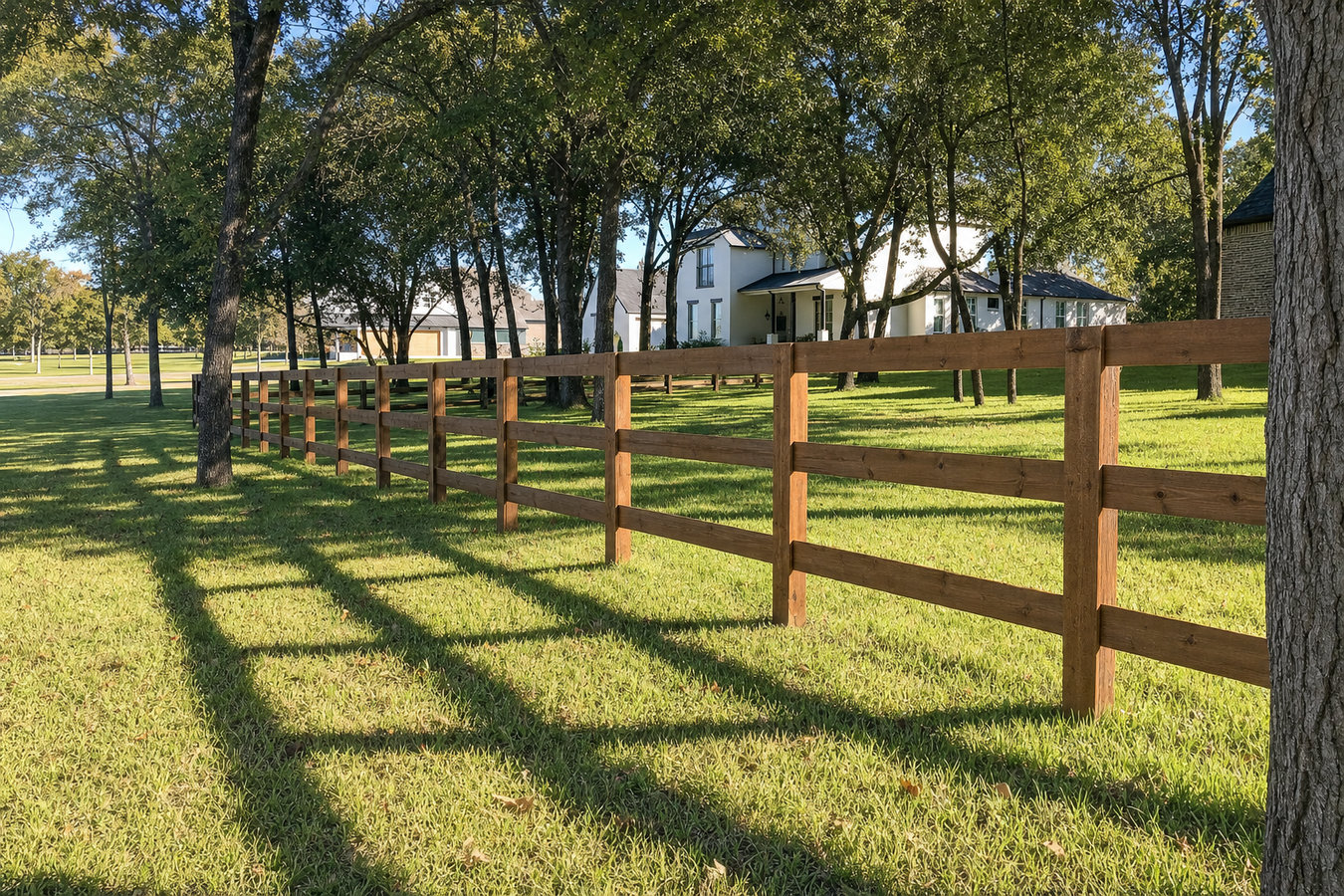
Caliche soil, coyote pressure, and 110-degree summers demand a fence contractor who knows this land. We install agricultural fencing that stays put and does its job season after season.
Farm and ranch fencing in San Luis covers perimeter lines, livestock pens, and interior cross-fencing - most small-to-mid parcels are completed in one to three days, with written quotes that account for caliche soil and local terrain before any work begins.
Agricultural land in the San Luis and Yuma County area presents two challenges that most national fencing guides don't mention: caliche soil that requires specialized equipment to drill through, and consistent wildlife pressure from coyotes and javelinas that a basic barbed wire fence won't stop. Getting the fence right the first time is cheaper than dealing with escaped livestock or predator access later. If you also need a separate secure enclosure for pets or smaller animals, our pet and dog fencing service can be installed as part of the same project.
We walk every property before quoting and give you a written breakdown of materials and labor - not just a single number - so you know exactly what you are paying for and why. Call us or fill out the estimate form and we will respond within one business day.
If posts tilt or rock when you push them, the fence is losing structural integrity. In San Luis, this often happens after monsoon rains soften the caliche layer that was holding posts in place, or when posts were not set deep enough to begin with. A leaning fence won't hold livestock reliably and gets worse with each weather event.
Sagging wire is one of the clearest signs a fence has reached the end of its useful life or was never tensioned correctly. Livestock - especially goats and young calves - find and exploit gaps quickly. If you have found animals on the wrong side of the fence more than once, the fence needs to be assessed before the problem gets worse.
Coyotes and javelinas are active throughout the San Luis area, and a deteriorating fence is an open invitation. If you are finding tracks, disturbed ground, or evidence of predator activity near your pens, your fence may no longer provide the protection it should. Wildlife pressure in this region is real and consistent.
A gate that drags, won't latch, or has started to sag at the hinge side signals the supporting post has shifted or the hardware has failed. In the intense San Luis heat, metal hardware expands and contracts repeatedly, accelerating wear on hinges and latches over time. A gate that won't close is both a security risk and a daily inconvenience.
We install the full range of agricultural fencing types used in the San Luis and Yuma County area - barbed wire for cattle and large perimeters, woven wire for goats, sheep, and smaller livestock, and high-tensile smooth wire for operations that want a longer-lasting system with less maintenance. Every job starts with an on-site walkthrough where we check soil conditions, note terrain challenges, confirm gate locations, and verify that any buried utilities are marked before a single post goes in. We call Arizona 811 as a standard part of every project - not as an afterthought.
For properties with wildlife pressure, we can configure woven wire with a buried apron along the base that prevents coyotes and javelinas from digging under the fence. If your operation uses rotational grazing, we design interior cross-fencing layouts that work with how you manage your land. If you also need a secure run for dogs or smaller animals, our chain link fence installation service is a proven option for smaller enclosures that require tighter containment than agricultural wire provides.
The most cost-effective option for large cattle perimeters and open rangeland where budget per linear foot matters more than gap control.
Best for properties with goats, sheep, hogs, or other small livestock that can push through or under barbed wire - also the right choice when predator exclusion is a priority.
A longer-lasting, lower-maintenance option for established operations that want fewer repairs over the life of the fence - higher upfront cost, lower long-term total cost.
Designed for rotational grazing setups or operations that need to separate pastures, animal types, or sections of a larger property.
The Yuma County area - including San Luis - has a long history of irrigated agriculture, and much of the rural land around the city has buried irrigation lines and lateral ditches crossing it. Hitting an irrigation line during post installation can damage infrastructure that serves neighboring farms as well as your own. That is why calling Arizona 811 before any digging is required by state law, and why hiring a contractor who does this as standard practice matters. San Luis also sits near the Sonoran Desert corridor, where javelinas and coyotes regularly cross agricultural land. A fence designed to exclude desert predators requires different wire heights and base configurations than a standard cattle perimeter. Homeowners in Gadsden and Somerton face the same conditions, and we have the experience and equipment to handle them.
Scheduling also matters here. Spring (March through May) and fall (October through November) are the best windows for major fence work in this area. Summer temperatures regularly top 110 degrees, limiting safe working hours, and the monsoon season from July through September can soften the ground around freshly set posts before the soil firms back up. Planning ahead and booking outside the heat window gives you better conditions and a more stable finished fence. The University of Arizona Cooperative Extension publishes regional fencing guidance specific to desert agricultural conditions that we follow when specifying materials and post depth for local projects.
You reach out and describe your property - approximate acreage, what animals you are managing, and what you are trying to accomplish. We respond within one business day. This conversation helps us know what to look for before the on-site visit.
We walk your fence line, check the soil, note any terrain challenges, and confirm gate locations. After the visit, you receive a written quote that breaks down materials and labor separately - not a single number. If a contractor quotes you over the phone without seeing your land, treat that as a ballpark only.
Before installation, we call Arizona 811 at least three business days in advance to have buried utilities and irrigation lines marked. We also confirm whether any existing fence needs to be removed and whether that is included in the scope of work - no surprises on the final bill.
The crew sets corner posts first, then line posts, then strings and tensions the wire. Gates are hung last. Before we leave, we walk the completed fence with you - checking that posts are solid, wire is tight, and every gate opens, closes, and latches correctly. Your animals can go back in the same day.
We walk your property, check the soil, and give you a full written breakdown before any work starts. No obligation to book.
(928) 291-0483Caliche - the hard calcium-rich layer just below the surface across most of the San Luis area - requires specialized drilling equipment to set posts correctly. We have the right tools and account for this soil condition in every estimate upfront. A contractor without local experience will either underbid and struggle on-site, or add charges once the crew is already there.
We walk your property before giving you a number. The quote you receive breaks down materials and labor separately so you know exactly what you are paying for. The final bill matches what we agreed to - we account for soil conditions, gate hardware, and terrain before work begins, not after.
For properties in the San Luis area where coyote and javelina pressure is a real concern, we configure woven wire with a buried apron at the base that prevents animals from digging under the fence. We ask about your wildlife situation upfront so the fence is built for your specific conditions, not a generic installation.
A properly installed farm fence is functional the moment the crew packs up. You can move animals back in, start using your gates, and get back to your normal routine the same day - no curing period, no follow-up visit required. We follow American Fence Association standards for post depth, corner bracing, and wire tensioning.
Agricultural fencing in the San Luis area demands materials and techniques suited to this specific desert climate - not the national averages you find online. Every fence we install is built to stay put through monsoon season and to do its job five years from now, not just on installation day.
Secure enclosures for dogs and smaller animals on properties that also need agricultural perimeter fencing.
Learn MoreA tighter containment option for smaller livestock pens, dog runs, or utility enclosures on rural properties.
Learn MoreGet a free on-site quote before the summer heat arrives. We walk your land, check the soil, and give you a written estimate the same day.